
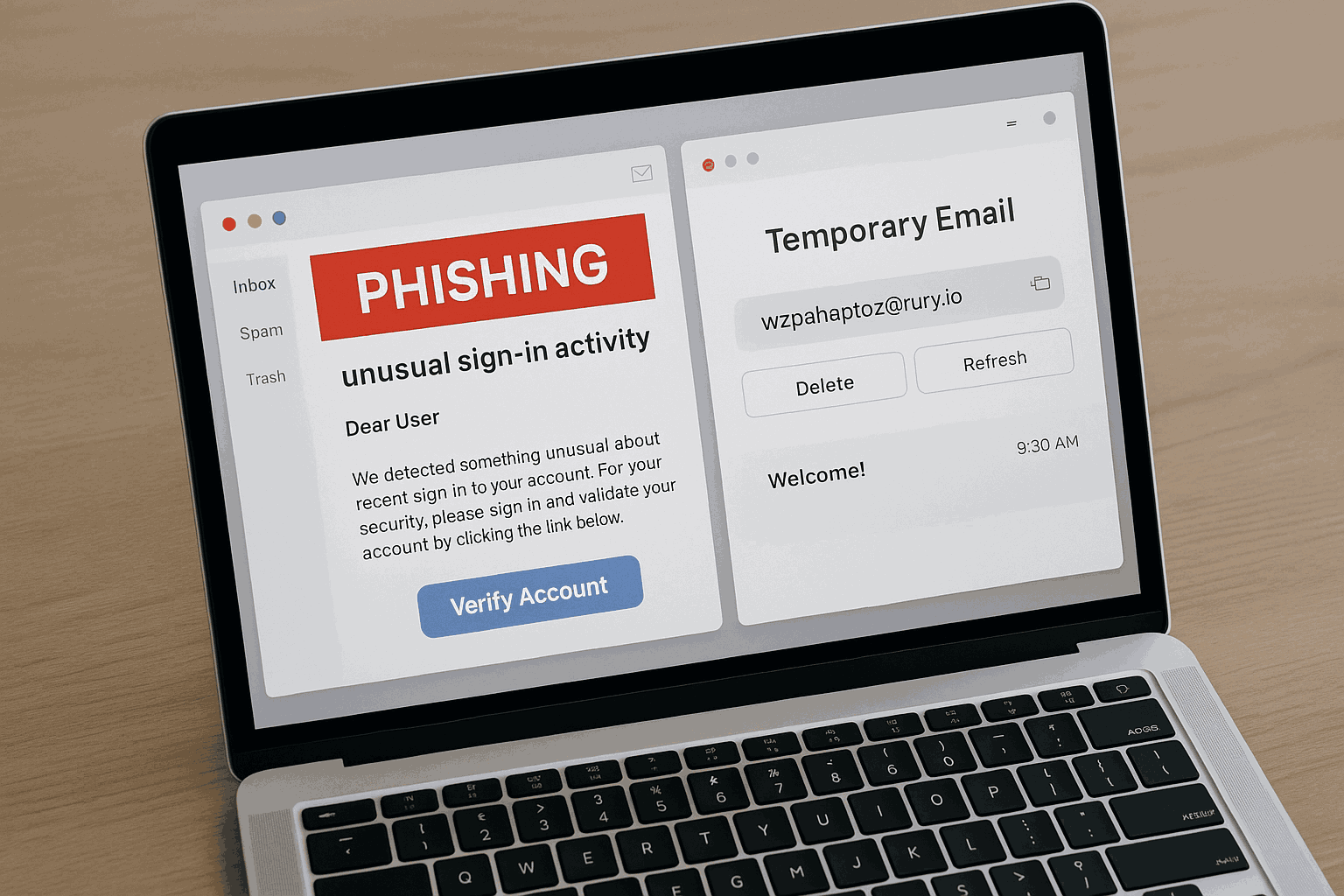
Phishing Risks & How Temporary Email Shields Your Inbox
Phishing Risks & How Temp Mail Helps Shield You 🎣🛡️
It always starts with something innocent.
An email shows up in your inbox: “We noticed unusual activity in your account. Please click here to verify your details.” The logo looks real. The wording feels urgent. Your heart skips a beat. 💔
This is phishing—a scam as old as the internet but still effective because it plays on trust and fear. And in today’s world, where your email address is the master key to your digital life, phishing has become one of the most dangerous threats online.
But here’s the good news: you’re not powerless. One simple tool—temporary email—can help reduce your exposure and keep your real inbox safe.
🎣 What Exactly Is Phishing?
Phishing is when cybercriminals disguise themselves as trusted organizations—like banks, delivery companies, or even social media platforms—to trick you into handing over sensitive information.
They send emails with fake links that look legitimate.
They may ask you to download infected attachments.
Or they push you to act fast: “Confirm within 24 hours or your account will be suspended!” ⏰
Example: A scammer sends a fake PayPal email. You click their link, log in, and unknowingly give them your real credentials.
Correction: Some people think phishing is easy to spot because of bad spelling. ❌ Not always. Modern phishing attempts often look polished and professional—sometimes even exact replicas of real emails.
⚡ Why Your Email Address Is the Bait
Think of your email like your home address 🏠. Once criminals know it, they know where to send their traps.
The more websites, contests, and freebies you sign up for with your real email, the more “bait lists” you end up on. Hackers often buy or steal these lists to launch phishing campaigns.
Example: You sign up for a random “free iPhone contest” online. A few weeks later, you start getting emails from “banks” you’ve never used. That’s because your email was harvested and resold.
🛡️ How Temporary Email Acts as a Shield
Here’s where temporary email flips the script. Instead of handing out your real inbox everywhere, you hand out decoys.
Metaphor: It’s like giving out a P.O. Box address 📮 instead of your actual home. If junk mail comes in, you toss the whole box and walk away.
Real-World Example: You download an eBook from a sketchy site using a temp email. If that address gets sold to phishers, all their attacks hit a dead inbox—you never see them in your main email.
Key Ways Temp Mail Protects You
Reduces exposure: Your real email is used less often, lowering the chance it ends up on phishing lists.
Blocks spam & fake offers in real time: Once you discard the temp address, phishing attempts can’t reach you.
Separates risky signups: Use temp mail for freebies, contests, or unverified sites, keeping your real inbox “clean” for trusted services only.
🚦 Real-Life Scenarios
Scenario 1: The “Delivery Notice” Scam
You enter a disposable email when shopping on a small site. If that site leaks data, scammers send fake “FedEx tracking” emails—but they never reach your main inbox.Scenario 2: The “Bank Alert” Trap
A hacker sends phishing attempts to addresses from a breached forum. If you used a temporary email to register, the attack hits a dead end.Scenario 3: The “Prize Winner” Hoax
You join a giveaway with temp mail. Weeks later, spammy “You’ve Won!” messages flood in—but you never see them, because that address is gone. 🎁
🛑 Common Misunderstandings (Corrected)
“Phishing only targets big companies.” ❌ Wrong. Anyone with an email address is a target. Hackers don’t care if you’re a CEO or a student—they send millions of bait emails hoping someone bites.
“Antivirus software stops phishing.” ❌ Not fully. Antivirus can block malicious files, but it can’t stop you from typing your password into a fake site. Prevention is about protecting your inbox at the source.
“I’ll just ignore phishing emails.” ❌ Even unopened, a cluttered inbox increases the risk of mistakes. Fewer phishing attempts reaching you = fewer chances to slip.
🧊 The Iceberg Mail Advantage
With Iceberg Mail, you can generate temporary addresses in seconds, use them for risky sign-ups, and discard them when done.
That means:
Less exposure of your main inbox 🛡️
Spam and phishing attempts stopped at the gate 🚪
Peace of mind knowing your personal email isn’t being sprayed across the web
It’s like carrying an umbrella in a storm ☔—you can’t stop the rain (phishing emails exist everywhere), but you can stop yourself from getting soaked.
✨ Bottom Line
Phishing is everywhere. But with smarter habits and temporary email as your shield, you can reduce your risk dramatically.
Save your real inbox for trusted logins like banking, healthcare, or work.
Use temp mail for giveaways, free trials, and sites you don’t fully trust.
Remember: the fewer places your real email appears, the fewer phishing hooks can reach you. 🎣
Protect your inbox, protect your identity—and keep the phishers hungry, not fed. 🛡️

