
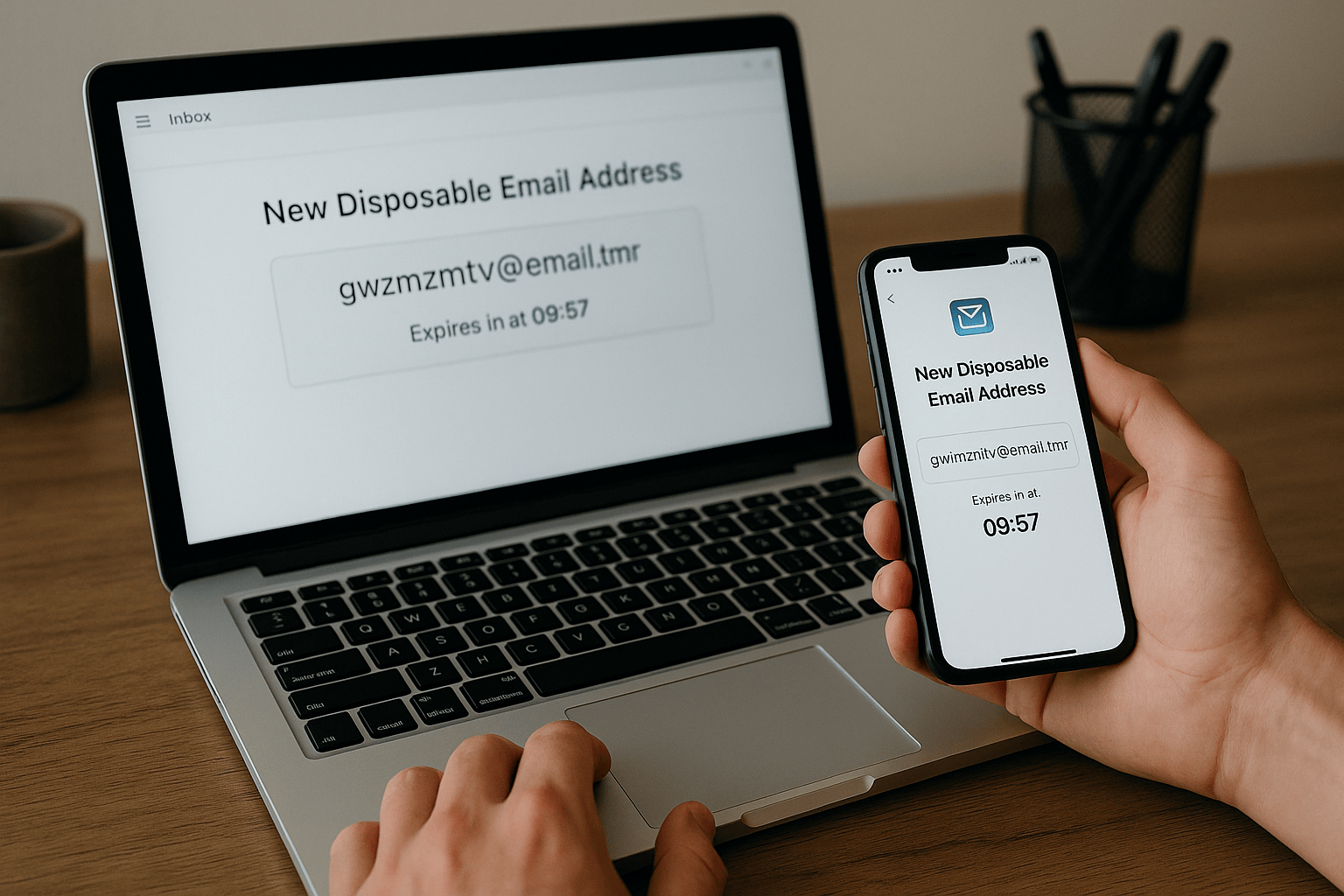
From 10-Minute Inboxes to Smart Aliases: The Evolution of Temporary Email
The Birth of Disposable Email (Early 2000s)
Temporary email began as a clever hack for avoiding spam. Early services like “Mailinator” offered quick, 10-minute inboxes anyone could use. They were perfect for grabbing free downloads or bypassing sign-up walls.
But there was a catch: messages disappeared almost instantly. If your verification email arrived late, it was gone forever.
👉 Problem: Users lost important confirmations because inboxes expired too soon.
The Rise of Public Inboxes (Mid 2000s)
Next came the era of public, shared inboxes. Anyone could open the same disposable address and read its contents. While it was fast and free, privacy was nonexistent.
Think of it like posting your mail on a community bulletin board. Fine for coupons, but terrible for sensitive logins.
👉 Problem: Anyone guessing your email could snoop on your data.
Flexibility Enters the Game (2010s)
As the need for privacy grew, new services introduced expiration controls. Instead of a fixed 10 minutes, users could choose 1 hour, 24 hours, or even “until deleted.”
This was a game-changer for app trials, multi-step verifications, or event reminders that didn’t fit the old rigid timeframe.
👉 Problem: Still, people forgot to forward critical emails before deletion.
Aliases and Forwarding Take Over (2020s)
To bridge the gap between temporary and permanent, smarter services introduced aliases—addresses you control long-term. With aliases, you can sign up for newsletters, shopping accounts, or games while keeping your real inbox private.
When spam shows up? Turn the alias off. When you need continuity? Forward emails straight to your permanent inbox.
👉 Solution: Disposable for the short-term, manageable aliases for the long-term.
Iceberg Mail: The Modern Stage 🧊
Iceberg Mail represents the most advanced phase in this evolution. It blends everything that worked in the past while fixing the biggest flaws:
Flexible expiration → you decide when an inbox ends.
Private-only inboxes → no one else can snoop.
Aliases with forwarding → continuity without exposure.
Smart filters & tracker blocking → protect against spam and surveillance.
Works on any device → instant, intuitive access.
It’s not just disposable anymore—it’s disposable with control, privacy, and reliability.
The Takeaway
The lifecycle of temporary email mirrors the journey of digital privacy itself:
First phase: Quick but fragile.
Second phase: Flexible but still insecure.
Third phase: Aliases and forwarding.
Now: Iceberg Mail, where disposable meets dependable.
Just like phones evolved from payphones → flip phones → smartphones, temporary email has gone from paper-plate convenience to a full privacy toolkit. And Iceberg Mail is today’s “smartphone moment” in that story.

